Explore water composition
Water hardness, alkalinity, units and controlled comparisons.
4 minute read, Chapter 10, lesson 3 of 5
Hardness mainly describes calcium and magnesium. Alkalinity describes how well water resists added acid. They are separate properties, even when reported in similar units.
Read units and equivalents
Reports may use mg/L as calcium carbonate equivalent. mg/L means milligrams per litre. “Equivalent” is a common way to express the measurement; it does not mean that exact mass of solid calcium carbonate is present.
pH and TDS
pH describes how acidic or basic water is at the time of measurement. TDS describes total dissolved material. Neither alone tells you hardness or alkalinity.
A report might list hardness and alkalinity with the same “mg/L as CaCO3” unit. Read the label beside each number. They still describe different properties, just as two lengths can share centimetres while measuring different objects.
Compare waters fairly
Compare two suitable drinking waters with known information using the same coffee recipe. Taste at similar temperatures. One mineral number does not guarantee fruitiness, sweetness or better extraction.
Studies of mineral interactions do not establish a guaranteed flavour for each ion. Distilled water can extract coffee, but it is not automatically suitable for every espresso machine. Taste suitability and equipment compatibility require separate checks.
Mixing and machine precautions
For mixing, a reputable premeasured coffee-water product used exactly as directed is simpler than improvised salt solutions. Do not use household chemicals from an unverified recipe. Check machine water requirements before putting new water in a boiler.
Interactive
Try this lesson in the Pourrr app.
In the app, this lesson comes with interactive visuals and a quick check.
Available in India on iOS and Android, with more countries to follow.


Available now on iOS and Android.
Record known information
Find hardness and alkalinity on a water report, or mark them unknown. Compare two safe waters in a manual brewer before planning a more involved routine.
- Read the report. Find hardness and alkalinity or write that they are unknown.
- Compare safe waters. Use a manual brewer for a simple controlled comparison.
- Record the cup. Save observations before considering mineral mixing.
Choose two safe waters and record what is known about each. Keep coffee, grind, dose and temperature fixed. If one tastes better, repeat the comparison before attributing the result to a single mineral.
In one lineRead hardness and alkalinity separately, and keep taste tests separate from machine requirements.
Practise it
RecipeTotal time
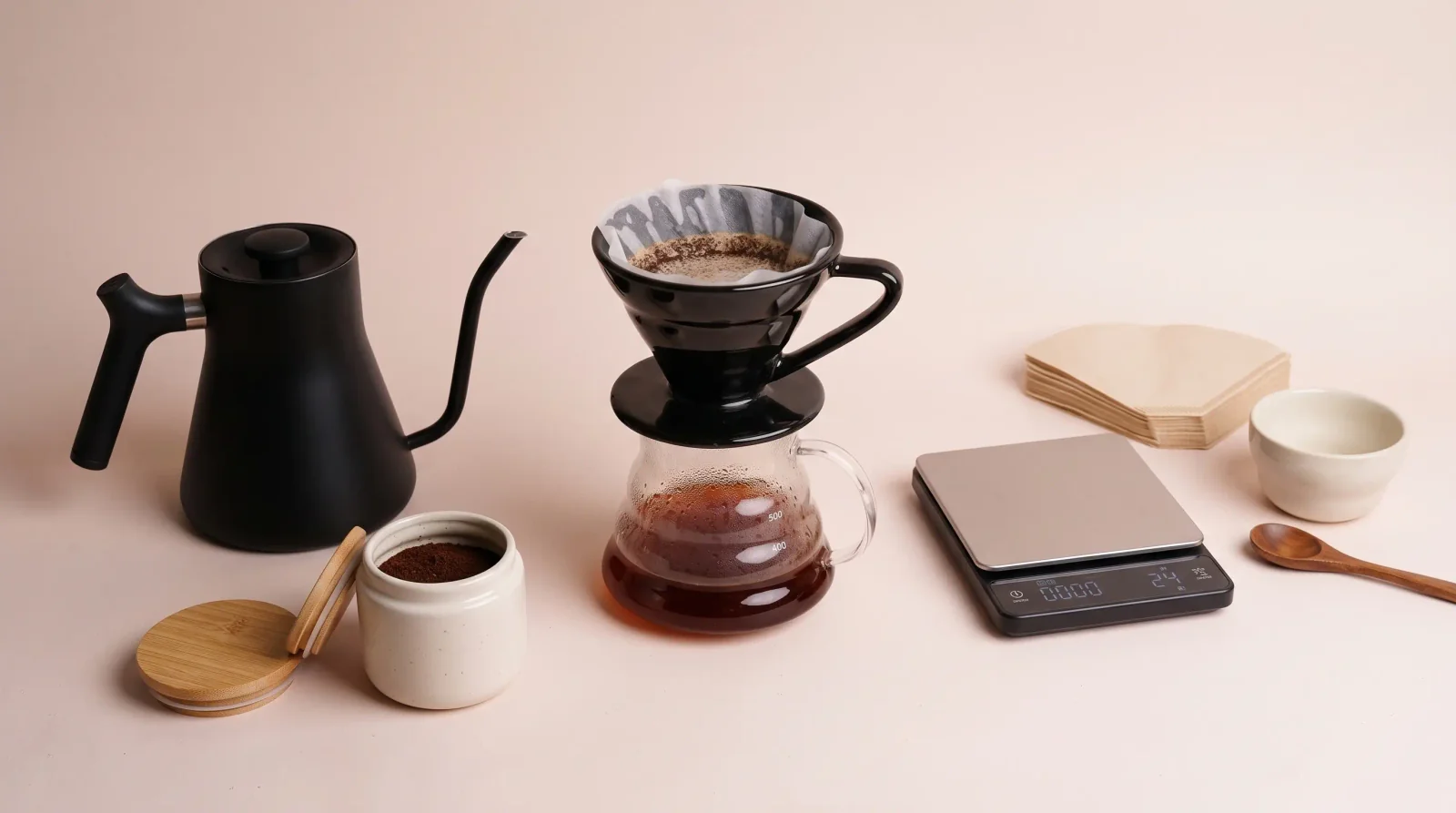
V60 classic one cup
A simple bloom and controlled pours. Keep the water targets cumulative.
Brew the lesson recipe