Time and the brew
Steeping time, draining time and consistent timing.
4 minute read, Chapter 01, lesson 4 of 5
Brew time means different things in different methods. Write down when your clock starts and stops so you can compare your own brews.
Steeping and flow time
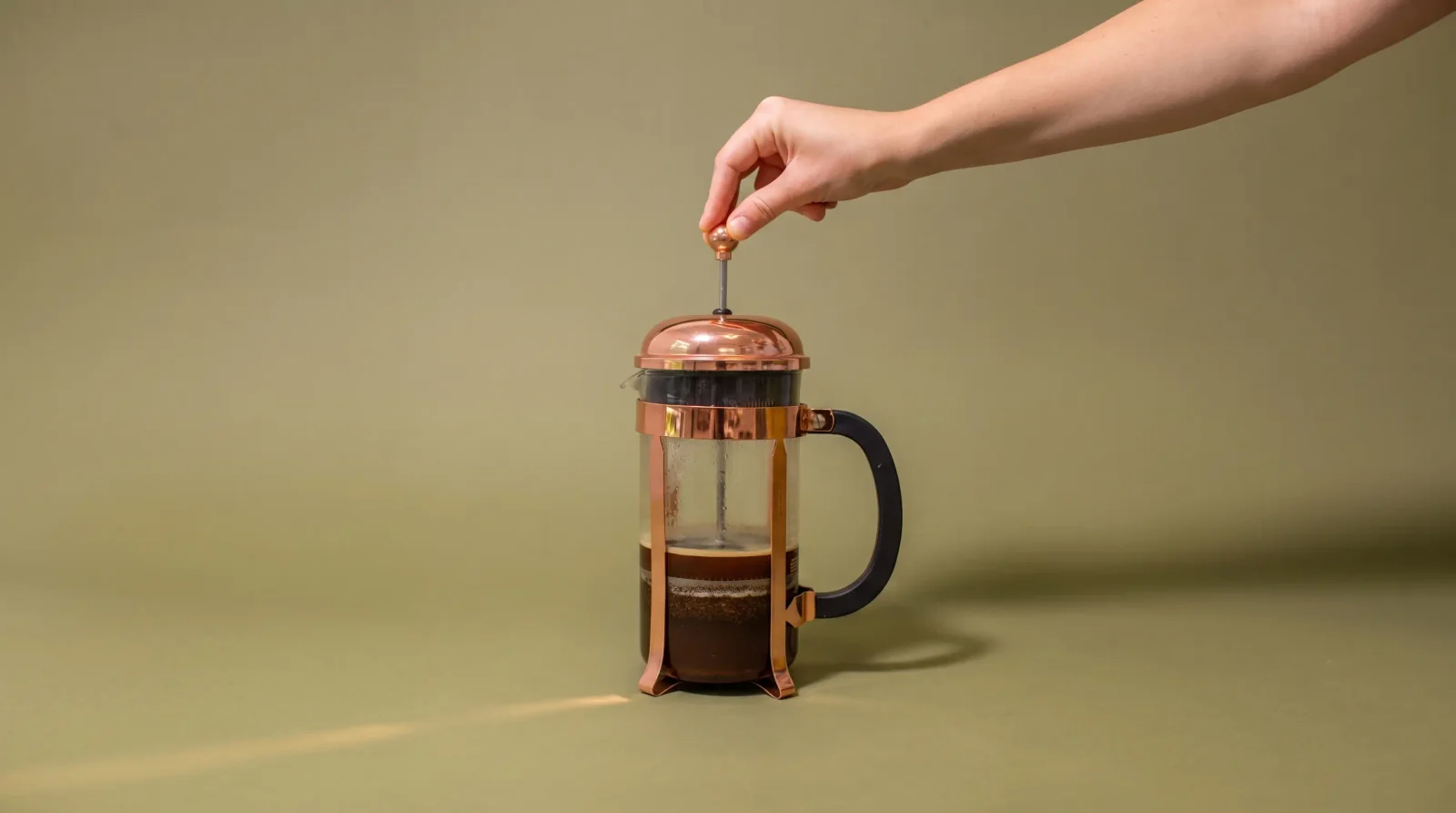
In a French press, you choose how long the grounds steep. In a pour-over, total time includes pouring and draining, so grind, filter, dose and pouring all affect the result. Espresso timing also depends on your start convention.
Recipe times are references
A four-minute press and a three-minute dripper can both taste good. Larger batches often take longer. A recipe time is a reference, not a pass-or-fail test.
“Three minutes total” could mean first water to the last drip. “Two minutes steeping” could mean the period before opening a valve. Record both if your brewer has a steep-and-release phase; they describe different parts of the process.
Investigating a timing change
If the same recipe suddenly drains much slower, check grind, filter placement and pouring. If a press tastes thin or undeveloped, a slightly longer steep is one experiment. Time alone does not identify the cause.
A slow dripper might be extracting more, or water might be struggling through a partly blocked bed. The clock cannot distinguish those cases. Taste, filter fit and pouring observations help explain the number.
Compounds extract together
Extraction does not follow a strict queue of acids, then sugars, then bitter compounds. Many substances dissolve during overlapping parts of the brew.
Interactive
Try this lesson in the Pourrr app.
In the app, this lesson comes with interactive visuals and a quick check.
Available in India on iOS and Android, with more countries to follow.


Available now on iOS and Android.
Record start and finish
Time a familiar brew from first water to your normal finish. Write the start and stop points beside your taste note. Repeat the same recipe once before changing it.
- Start consistently. Record where your timing begins.
- Separate the intervals. Write steep, drain or total time clearly.
- Compare with taste. Change only one likely cause on the next brew.
Repeat one recipe and note pouring finish time and brewing finish time separately. If the total changes, which part changed? For a press, compare two chosen steep times while keeping the other ingredients and serving method the same.
In one lineUse a clearly defined brew time as a clue alongside taste.
Practise it
RecipeTotal time
French press Hoffmann no-plunge
A longer settling routine. Strain at the surface and leave sediment behind.
Brew the lesson recipe