Steam milk with care
Adding air and mixing milk into a smooth, pourable texture.
5 minute read, Chapter 08, lesson 4 of 5
Steaming milk adds heat and a little air, then mixes the bubbles through the liquid. Smooth, integrated foam pours more easily than stiff foam with large bubbles.
- Air. A little air near the surface starts the texture.
- Mix. Rolling milk integrates the foam into the liquid.
Prepare the milk and wand
Start with cold milk in a clean pitcher with room to expand. Follow the machine’s fill and wand directions. Purge briefly into the tray. Keep hands clear of the hot wand and steam.
Add air, then mix
Hold the tip near the surface to add a little air early. Lower it slightly and create a rolling motion to mix. For dairy, 60–65 °C is a common serving-texture reference. Follow the milk and machine guidance; plant drinks differ.
- Introduce air. Start with the tip near the surface.
- Roll and mix. Lower it slightly to find a mixing motion.
- Watch temperature. Use suitable measurement and milk-specific guidance.
If milk lands as a large stiff blob, try adding less air next time while keeping the same milk and pitcher amount. If it stays thin with little foam, check tip position and the machine’s method before making several changes.
Steam off and clean
Turn steam off before removing the tip. Swirl the milk and pour promptly. Wipe and purge the wand as directed. Use a fresh portion for the next drink instead of repeatedly reheating leftovers.
Different plant drinks and dairy products do not foam identically. “Barista” formulations may behave differently from another carton. Follow the actual product and machine guidance rather than using one temperature as a guarantee.
Use suitable temperature guidance
A thermometer is more dependable than judging heat by touch. The dairy temperature range is not a universal rule for every milk product or machine.
Interactive
Try this lesson in the Pourrr app.
In the app, this lesson comes with interactive visuals and a quick check.
Available in India on iOS and Android, with more countries to follow.


Available now on iOS and Android.
Practise smooth texture
Practise one small pitcher, focusing on a glossy, smooth texture. Stop before overheating. A milk coffee can taste good without a decorative pattern.
- Start small. Use an amount suited to your pitcher and machine.
- Watch texture. Aim for smooth integration before attempting a pattern.
- Stop before overheating. End safely and clean the wand.
After steaming, look for a glossy surface and milk that flows as one mixture. Does the foam separate quickly? Change one step, such as the time spent adding air, and compare the next small pitcher.
In one lineAdd a little air, mix it through, and turn steam off before lifting the wand.
Practise it
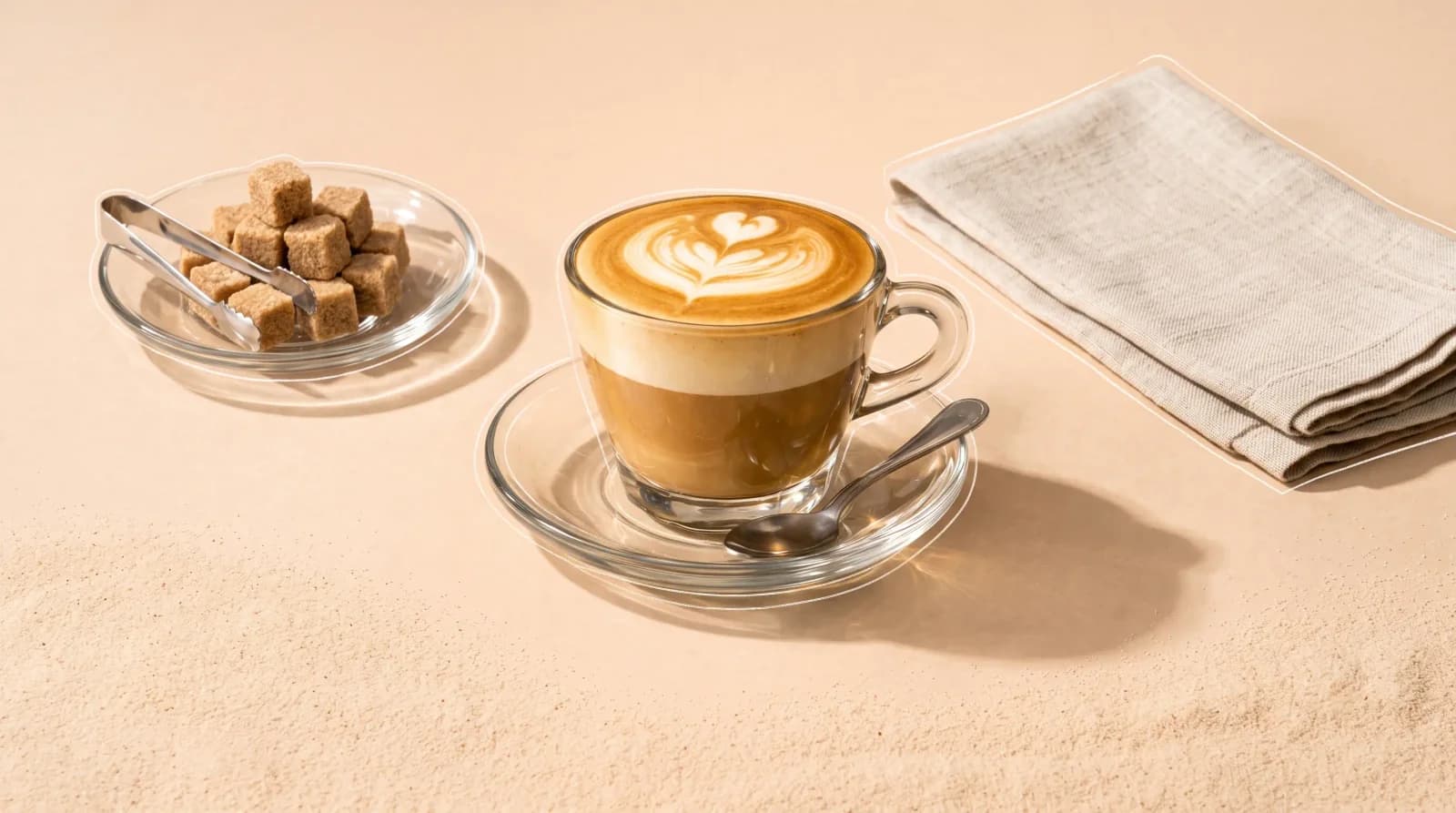
RecipeTotal time
Caffè latte
Espresso and glossy milk, poured to a strength you enjoy.
Brew the lesson recipe