Understand pour-over
How water passes through a coffee bed in a pour-over.
4 minute read, Chapter 06, lesson 1 of 5
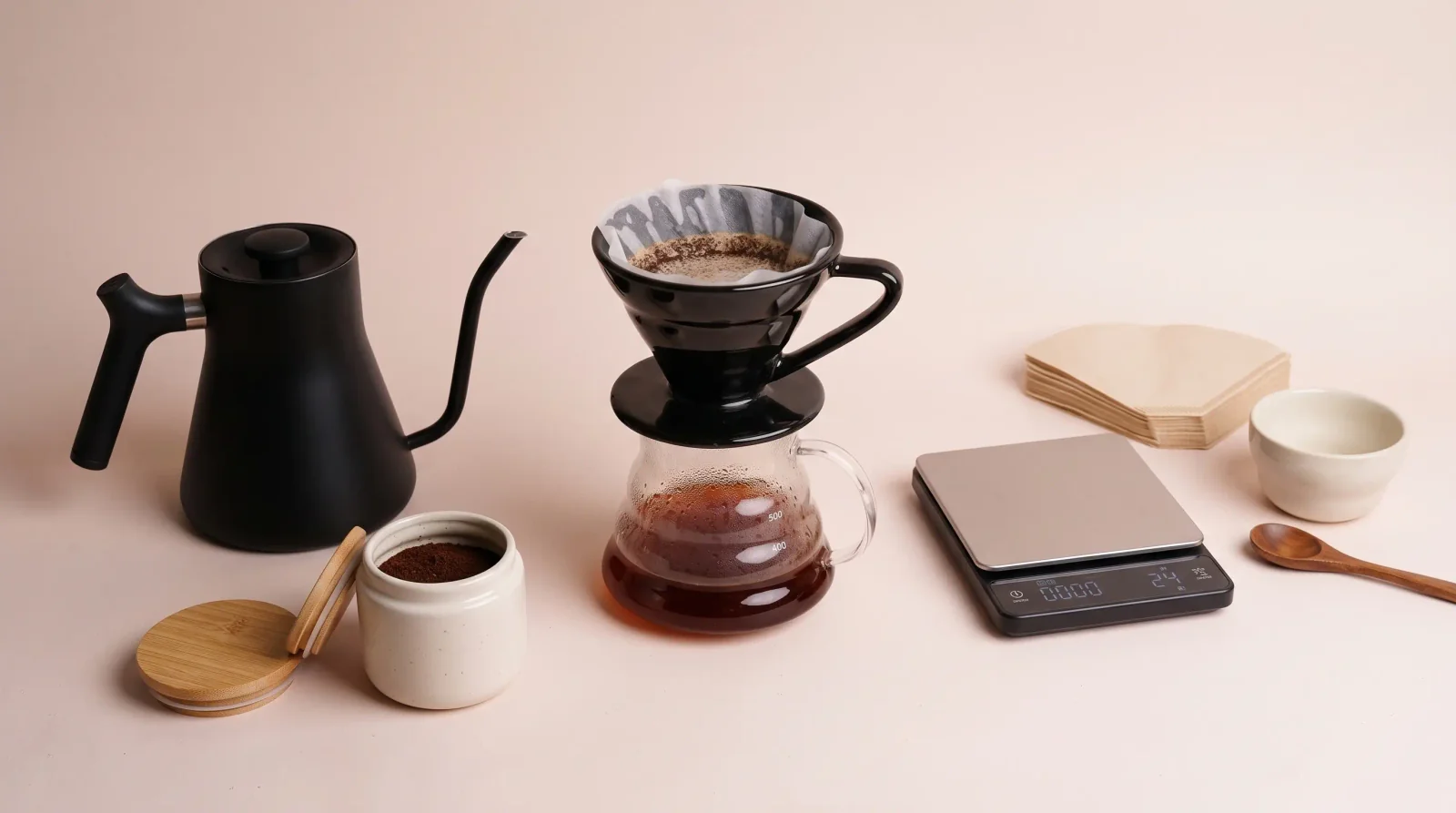
Percolation means water passes through the grounds and leaves as brewed coffee. A paper dripper is a familiar example.
- Enter. Water meets the coffee at the top.
- Travel. It passes through the bed and filter into the server.
The bed resists flow
The grind, bed depth, filter, brewer shape and pouring all affect the water’s path. The coffee bed resists flow, so the water does not pass through as if it were an empty funnel.
- Coffee bed. Grounds resist and redirect the moving water.
- Filter and brewer. Paper, shape and outlets also influence the path.
Wetting and bypass
Wet the whole bed. Dry pockets and uneven packing can give some grounds more contact than others. Water can also go around the bed as bypass.
A pour finishes at 1:40 but the last dripping ends at 3:00. The total brew time is three minutes from first water; the final draining phase took one minute twenty seconds. Recording both helps show whether a change affected pouring or draining.
Time, taste and observation
Compare taste with total time, pouring and the spent grounds. A fast or slow finish does not prove a particular flavour. Use a new recipe as a starting point, then learn how it behaves with your coffee.
A larger dose makes a deeper bed and may slow flow even with the same grind. Comparing two brewer shapes also changes filters and geometry, so it does not isolate shape alone.
Brewer shape and valves
Brewer shape is only one part of the method. No shape guarantees an extraction level or flavour. A steep-and-release dripper adds a valve that chooses when draining begins.
- Cone. Coffee forms a deeper tapered bed.
- Flatbed. Coffee spreads across a flatter base.
- Steep and release. A closed valve holds the brew before release.
Interactive
Try this lesson in the Pourrr app.
In the app, this lesson comes with interactive visuals and a quick check.
Available in India on iOS and Android, with more countries to follow.


Available now on iOS and Android.
Record pouring and draining
Watch a dripper safely from the side and above. Record when pouring finishes and when draining finishes. These are different moments.
- Watch safely. Look from the side and above without touching hot surfaces.
- Record pouring. Note when the last pour ends.
- Record draining. Note when the brew finishes draining.
Repeat your recipe with the same pouring pattern. If the time changes, inspect wetting and filter fit, then taste. Which clue gives you a useful next experiment?
In one lineRecord both pouring and draining, and compare them with the taste.
Practise it
RecipeTotal time
V60 classic one cup
A simple bloom and controlled pours. Keep the water targets cumulative.
Brew the lesson recipe