Brew a fresh iced pour-over
Hot extraction over measured ice for iced pour-over.
4 minute read, Chapter 09, lesson 2 of 5
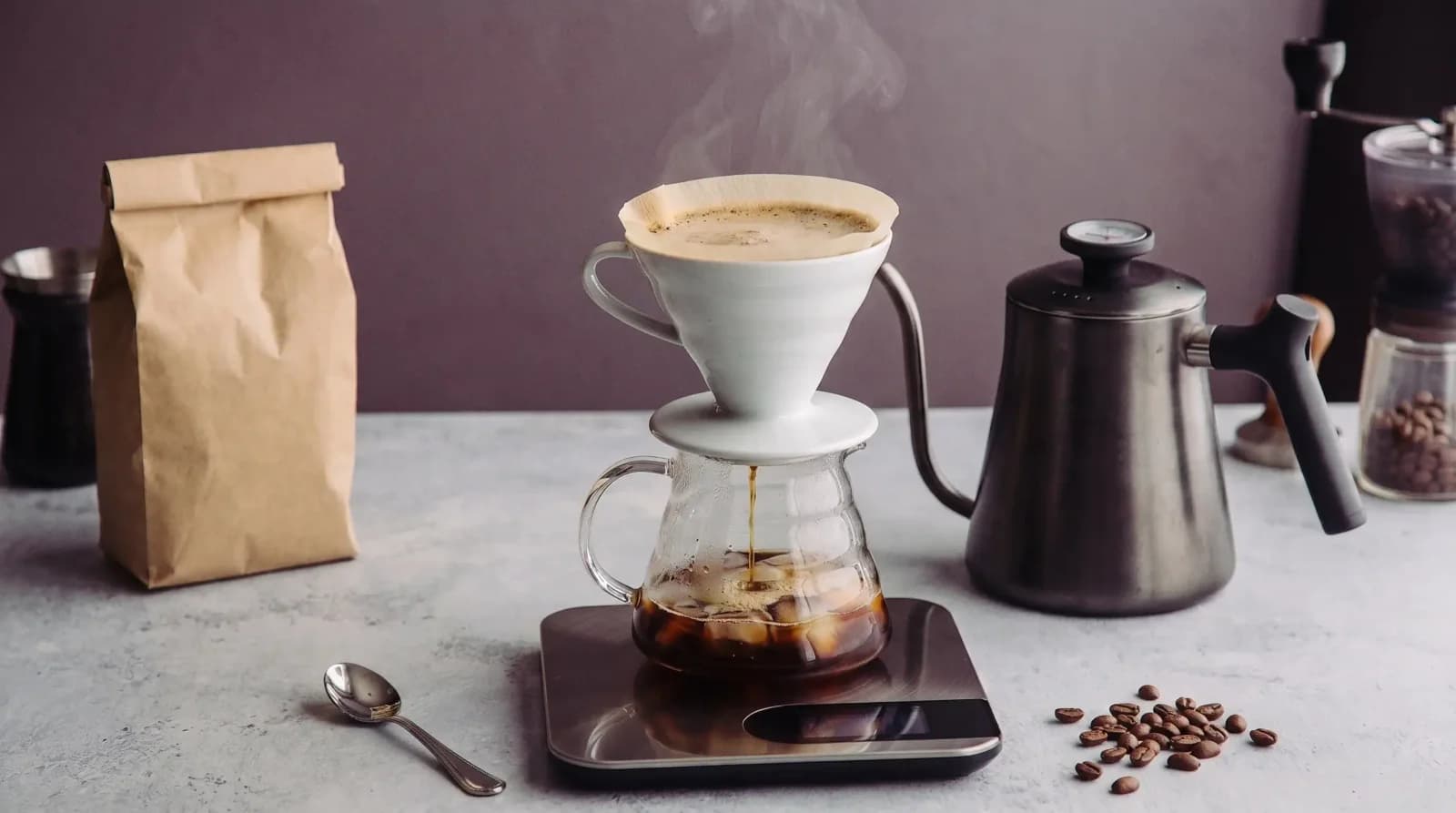
Flash brew makes hot pour-over coffee directly onto ice. Split the water budget between the kettle and the server before brewing.
Hot water and ice amounts
Use 15 g coffee, 150 g hot water and 100 g ice in a heat-safe server. The planned total water input is 250 g, about 1:16.7. Grounds retain water, so the finished drink weight differs.
Brew onto measured ice
Rinse the filter and discard the rinse before adding the measured ice below. Start with medium-fine coffee. Bloom with 45 g hot water until 0:45, then pour to 90 g and 150 g total hot water. Let it drain and swirl the drink to chill evenly.
After the 45 g bloom, reaching 90 g needs 45 g more. Reaching 150 g needs a further 60 g. Add the 100 g ice in the server to get 250 g planned water. Dividing 250 by 15 gives about 16.7 g water per gram of coffee.
Extraction in the hot phase
Only the 150 g hot portion passes through the grounds. Compared with a fully hot 250 g recipe, you may need finer grinding or adjusted pouring for enough extraction. Change one thing at a time.
If the drink is weak, first check the full water and ice budget. It may also need better extraction during the small hot phase. A finer setting can help access to the grounds but may slow or disrupt flow, so judge the result by taste.
Extra ice is extra dilution
Extra serving ice can dilute the drink further as it melts. Initial ice belongs in the recipe; extra ice is another ingredient to record. Chilling does not preserve every aroma indefinitely.
Interactive
Try this lesson in the Pourrr app.
In the app, this lesson comes with interactive visuals and a quick check.
Available in India on iOS and Android, with more countries to follow.


Available now on iOS and Android.
Record and taste
Record hot water, initial ice and extra serving water or ice. Taste before and after extra ice melts so you can decide whether the final strength suits you.
- Measure both parts. Weigh hot water and initial ice separately.
- Record additions. Include any extra serving water or ice.
- Taste the change. Compare before and after extra ice.
Observe how much initial ice remains after draining. Taste when chilled, then after any extra ice melts. Did dilution change the intensity more than the flavour? Use that observation to plan the next glass.
In one lineCount 150 g hot water and 100 g ice together, but keep their roles separate.
Practise it
RecipeTotal time
V60 Japanese iced flash brew
A hot pour-over over measured ice. Count both parts in the water input.
Brew the lesson recipe